How to Buy a Horse Trailer?
Investing in a quality horse trailer is essential for ensuring your horse’s safety while meeting your practical transport needs. Selecting the appropriate trailer simplifies hauling tasks and provides safety and comfort for drivers.
When selecting a trailer for trips to horse shows, veterinary visits, or other travel, key factors to consider include durability, safety features, and overall ride comfort. At Trailer Vault, we offer many variations of horse trailers.
Types of Horse Trailers & Their Importance
To assist you in choosing the best trailer for your hauling requirements, we have outlined the standard horse trailer options along with their main benefits.
- Bumper Pull – Easy to maneuver, park, and tow. Compatible with multiple vehicles such as SUVs or smaller trucks.
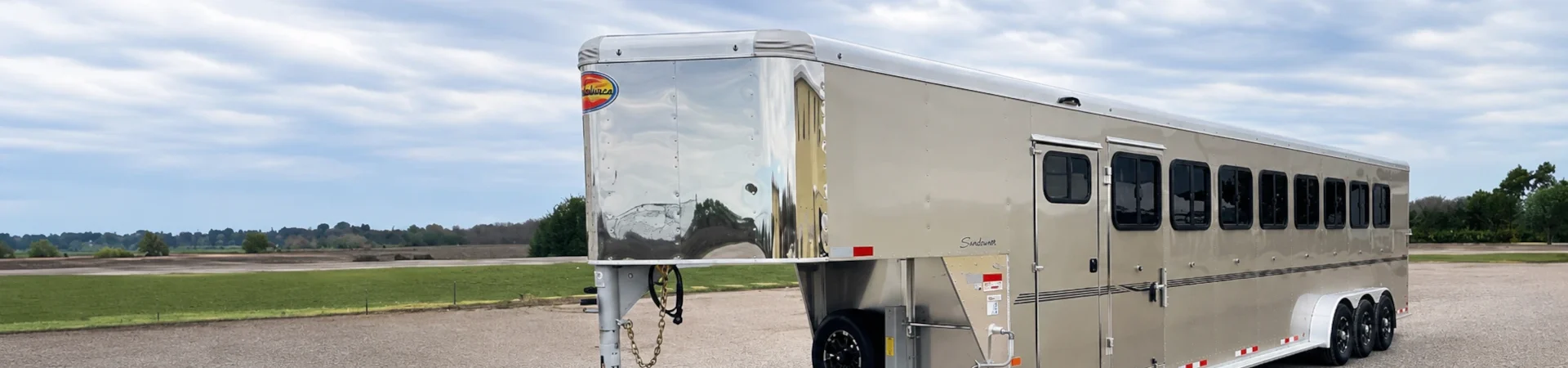
- Gooseneck – Provides greater stability, more spacing, and better weight distribution. Though they support easy towing, they require a pickup truck with a bed hitch.
- Straight Load – Ideal for larger breeds, these trailers line horses up facing straight ahead. Their generous interior space allows multiple configurations for loading/unloading and multi use options.
- Slant Load – These trailers position horses at an angle, thus utilizing the trailer space efficiently and comprising different storage compartments.
- Stock Trailers – Provide maximum ventilation due to their open sides, but don’t offer protection against weather conditions. Can accommodate many types of cargo, including horses.
- Enclosed Trailers – They are fully enclosed and offer maximum protection against weather conditions or road debris.
- Living Quarters – Suitable for horse owners who camp with their horses or stay. Living quarters horse trailers offer comfortable accommodation for horses and a living space for their owners.
Key Features to Consider When Buying a Horse Trailer
Interior Size and Spacing
Your horse should be able to stand square with its head up without touching the roof, and shift its weight without scraping the dividers. Measure your horse and compare it to the stall dimensions, not just the trailer’s overall length.
Construction Material
Aluminum is lightweight and rust-resistant, which lowers towing weight and upkeep. Steel is stronger and takes impact better, but it needs rust protection and regular maintenance. Check the flooring separately — it carries the load and is the first thing to fail if it’s been neglected.
Ventilation and Airflow
Poor airflow causes heat stress and respiratory problems on long hauls. Look for roof vents, adjustable windows, and adequate airflow at head height. Living quarters and enclosed trailers should have a plan for cooling, whether that’s vents, fans, or an AC unit.
Loading Style: Ramp vs. Step-Up
A ramp may be easier for some horses, horses with joint issues, and anxious loaders. A step-up is simpler with less trailer loading /unloading components. Knowing your horse and his/her preferences paired with backing out versus turning around to unload should be the first consideration. Most step up trailers have the option to add a ramp if the need arises.
Tack Storage
Enclosed tack compartments keep saddles, bridles, and gear organized and out of the horse area. Look at the size of the compartment, how it’s sealed against dust and weather, and whether saddle racks and bridle hooks are built in or added on.
Tow Vehicle Compatibility
Check your vehicle’s tow rating against the trailer’s loaded weight — trailer, horses, tack, water, and hay. Overloading strains the engine and brakes and is the most common towing mistake. Confirm the hitch class and, for a gooseneck, that your truck bed is set up for it.
Inspection Checklist: What to Look For Before You Buy
Two trailers can look identical on the lot but built very differently. Walk through these before you sign:
- Doors and feed doors: Factory-built by the trailer manufacturer, or purchased and fitted after? Add-on doors are more likely to leak and sit loose.
- Roof vents: Framed into the roof, or hanging exposed with sharp edges in the horse area?
- Running boards: Wide enough to step on straight? If you have to turn your foot sideways to get in, they’re too narrow.
- Fender wall: Protected with rubber trim, or an exposed sharp edge?
- Bumper pull tongue: The shorter the tongue, the easier it is to turn too tight and dent the front.
- Gooseneck support: Does the steel stop under the neck — a weak point — or attach to the body? Check the nose window size while you’re there.
- Dividers: Do they rattle in the closed position? Noise travels, and it stresses horses on long hauls.
- Sharp edges: Run your hand along the horse area and the exterior. Smoother is safer.
- Wall construction: Single-walled dents easily. Double-walled holds up.
Explore Financing Options for Budget Buying
At Trailer Vault, we offer a range of new and used horse trailers for sale in Auburn, CA. We work with a network of lenders, so a trailer that’s out of reach as a cash purchase may be within budget when financed.
Our trailer professionals can match a trailer to your horses, your tow vehicle, and how you travel — whether that’s a weekend bumper pull or a living quarters rig for the show season.
FAQs
Bumper pull or gooseneck — which should I buy?
Start with your tow vehicle. A bumper pull works with an SUV or half-ton truck and is easier to park and maneuver. A gooseneck needs a pickup with a bed hitch, but it tows more steadily at highway speed and distributes weight better — worth it if you haul long distances regularly.
Is a slant load or straight load better for my horse?
Slant loads fit more horses in less trailer length and usually include more storage. Straight loads give each horse more room to brace and are the better fit for larger or taller horses. If your horse is wide, tall, or travels poorly, a straight load may be the safer default.
Should I get an aluminum or steel horse trailer?
Aluminum weighs less, resists rust, and is easier on your tow vehicle and fuel. Steel costs less and takes a hit better, but it needs rust maintenance, especially in wet climates or if you haul near the coast. Many trailers combine both — a steel frame with an aluminum skin.
Can I tow a horse trailer with an SUV?
Often yes, for a smaller bumper pull with one or two horses. Check your SUV’s tow rating against the trailer’s loaded weight — including horses, tack, water, and hay — and make sure it’s equipped with the right hitch class and a brake controller.